Walking a Test Forward Instead of Optimizing It
09/03/2026

Take a rule with three adjustable numbers, try a few dozen values for each, and something will come out looking excellent. That is not a discovery, it is an inevitability. With enough combinations, the best one is the one that fitted the historical noise most closely, and noise does not repeat. Walking a test forward is the least elaborate answer to that problem, and it is uncomfortable in a way that reoptimising never is.
What a Search Over Parameters Really Finds

An optimiser reports the combination with the best score, and reports it with no indication of how much better it was than the alternatives. That gap is the interesting part. If the best setting sits on a broad plateau where neighbouring values perform similarly, the result probably reflects something structural. If it sits on a spike surrounded by mediocrity, the setting is describing particular sessions rather than a persistent behaviour.
The spike is the more common outcome, and it is also the one that looks best on a report. Nothing in the output labels it as fragile. You have to go and look at the surrounding values to see it, and by then the number has usually been written down.
The Shape of the Procedure
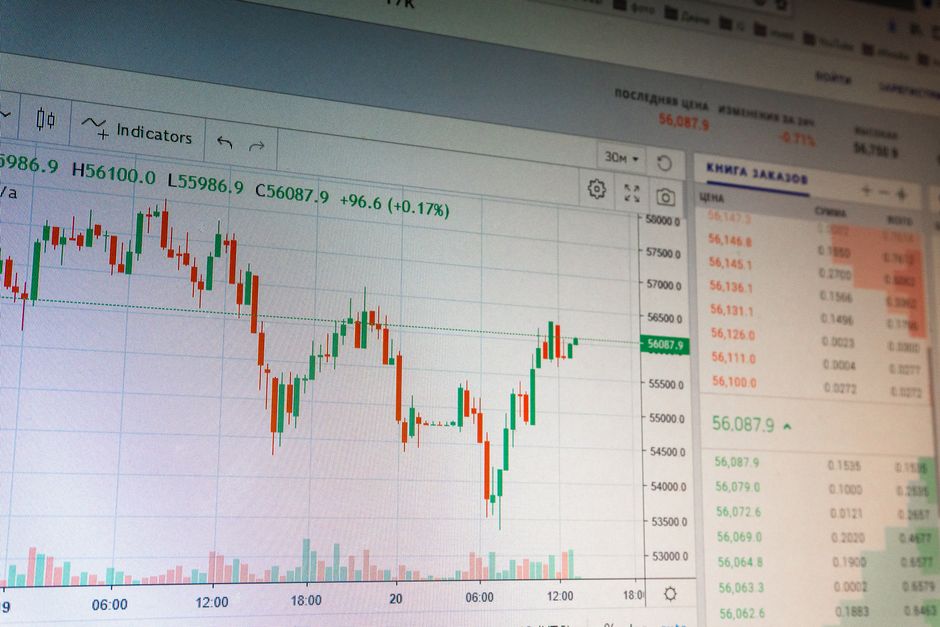
A walk forward splits the history into consecutive blocks. Parameters are chosen on the first block, then applied unchanged to the block that follows, which the optimiser never saw. The window then slides forward, parameters are rechosen on the newly available data, and the process repeats to the end of the history.
The result you keep is the concatenation of the untouched blocks. It is not the best the strategy could have done. It is what the strategy would have produced if you had been choosing parameters as the data arrived, which is the only situation you will ever actually be in.
Reading What Comes Out
Two things are worth watching. The first is the gap between in sample and out of sample performance in each block. A large and consistent gap says the fitting procedure is picking up noise, regardless of how good the final number looks. A small gap says the parameters are catching something more durable.
The second is whether the chosen parameters stay in the same neighbourhood block to block. Values that drift gently are plausible. Values that jump to a different corner of the search space each time are being redrawn from scratch, which means there was nothing stable to find and the optimiser was simply describing whichever block it was handed.
What It Costs
Walking a test forward consumes history. Each block spent choosing parameters is a block that cannot also serve as evidence, so an already small sample gets smaller. For an opening range rule with a few hundred trades to begin with, this is a real constraint rather than a theoretical one. Blocks large enough to fit on leave few blocks to test on, and blocks small enough to leave many test segments are too small to fit anything reliably.
There is no clean resolution. The usual compromise is to reduce the number of parameters being fitted until the procedure becomes affordable, which is a healthier response than it sounds. A rule with one adjustable number needs far less data to fit than a rule with four, and it is far harder to overfit by accident.
It Is Not a Guarantee
A walk forward run once is honest. A walk forward run twenty times, with the rule structure adjusted between runs until the out of sample segments look good, is optimisation again with extra steps. The unseen data stops being unseen the moment its results are used to change the design.
The only defence is to decide what the rule is before running the procedure, and to accept the answer that comes back, including when the answer is that the rule does not work. That discipline is the whole value of the method, and it is also the part most often skipped, because a disappointing walk forward always looks like it could be fixed with one more adjustment.